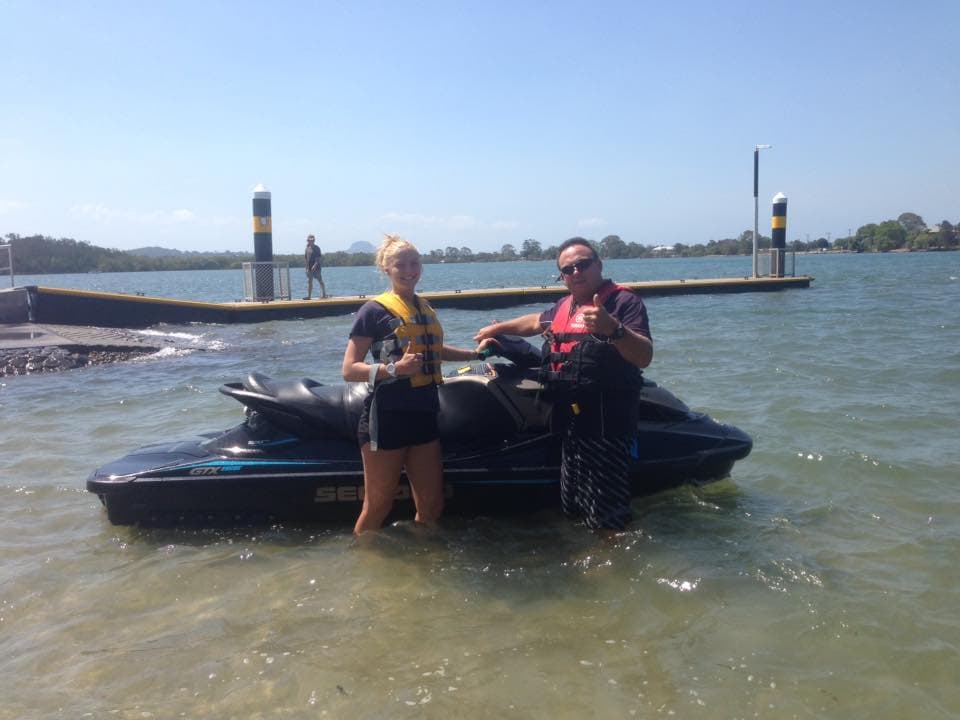
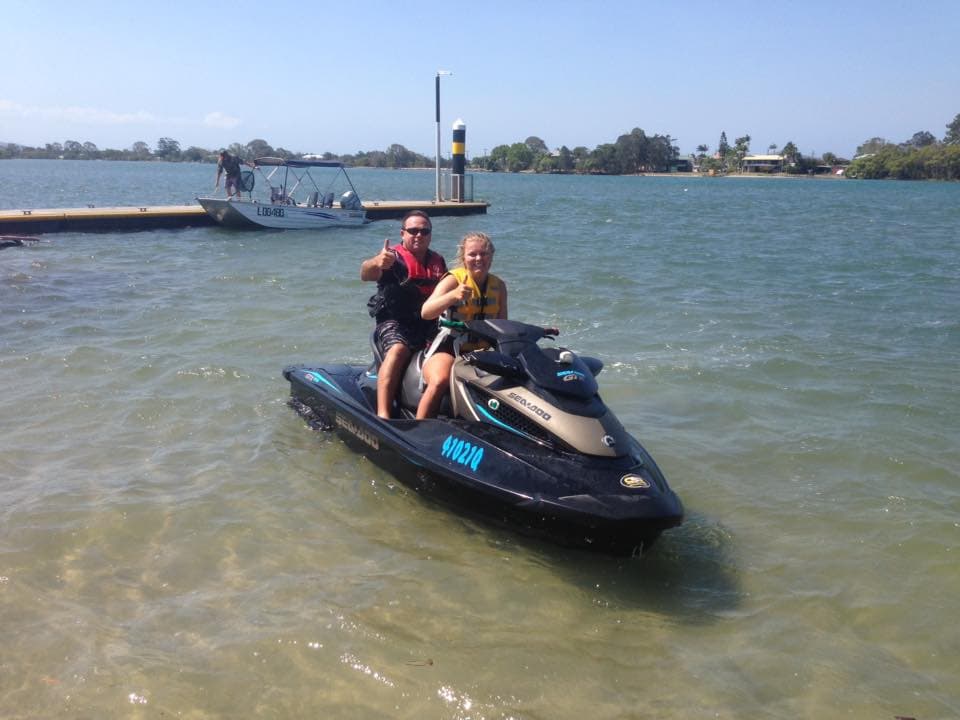
Maroochydore is the one suburb where the jet ski practical happens on home water. The course runs from our venue on the lower Maroochy River, and that's the river you'll launch into once you're licensed. It's busy water. The council's register counts 23 access points in the locality, and every ramp, pontoon and moored boat changes what a ski may do near it. You do the theory online first. The course day then brings a theory recap, the assessment and a one-on-one practical on the jet ski, with the ski, lifejackets and gear supplied. You need a current boat licence to sit the jet ski course alone. If you don't have one, the Boat and Jet Ski Combo covers both.
One rule shapes riding in Maroochydore more than any sign on the bank. Queensland law holds a personal watercraft to 6 knots anywhere within 60 metres of a person in the water, a boat at anchor or on a mooring, a jetty, a pontoon, a boat ramp, or the shore. On a river this crowded with launch points, that 60 metre bubble covers a lot of what you can see from the foreshore. Knowing where it ends is most of the skill.
A boat driver on the lower Maroochy mostly watches the posted zones. A ski rider watches those too, plus a second layer of rules that travels with the ski. The gazetted 6-knot water sits around Chambers Island and on Eudlo Creek near the Fishermans Road public ramp. Everyone obeys those. The PWC distance rules apply to you alone, and they move with the traffic. A swimmer off the bank puts a fresh 60 metre circle on the river. A moving boat or paddler brings its own limit too: no more than 10 knots while you're within 30 metres of it.
There's one exception that matters on a river shaped like this one. Where the water is less than 120 metres wide, a ski may run above 6 knots near the bank, up to the posted limit, as long as it keeps to the middle or a marked channel and heads straight through. That's the law recognising that narrow water has shore on both sides. It isn't a licence to carve. The south channel past Goat Island shrinks to under 50 metres, and MSQ keeps signs there warning of shoaling and sand banks that keep changing. Narrow, shifting water is somewhere to use that exception with care.
Then there's the river mouth. MSQ's Beacon to Beacon guide says the Maroochy bar is dangerous and shouldn't be crossed without local knowledge, and it notes the beacons get moved as the channel wanders. Of 35 incidents recorded in the lower river since July 2000, 18 were on the bar. Maroochy is also the only one of the coast's four bars with no marine rescue unit at its own entrance, and MSQ's checklist asks you to log on and off with a rescue group by radio before crossing. Sort out how you'd do that from a ski before the ocean looks tempting. ABC Boating's bar guide is blunt about it: any doubt, don't go.
Wave jumping is where a lot of new riders want to end up. In tidal water the law bans freestyling, surfing or wave jumping within 200 metres of the shore wherever homes sit within 100 metres of the shoreline and can be seen from where you're riding. Freestyling, in the regulation's words, is riding so unpredictably that other skippers can't work out how to steer clear of you.
Because the practical runs here, none of this stays on paper. You'll ride the Seadoo the course uses. Its braking, reversing and learner mode give a novice a head start, and it's stable enough to make the docking and figure 8 tasks easier. The session is one-on-one. If you need more time on the water to feel competent, we'd rather you took it.
A couple of basics before you book. You have to be 16 to hold the licence, and once it's issued it doesn't expire, so the time you spend learning this river now keeps paying off every summer. Until then you can still ride, as long as someone aboard holds a valid marine licence and can take control straight away. That arrangement ends the day you want to head out on your own.
The course itself is the same wherever you sit it: the theory online first, in your own time, then a day on the water with a trainer before the assessment. You need a licence for any boat with an engine over 4.5 kilowatts, which is nearly every tinny, runabout and cruiser. Pass, and the Queensland licence never expires. Pick the date that suits you and book online.