Rainbow Beach has a four-lane public ramp at Carlo Point on the east side of Tin Can Inlet. What it doesn't have is a boat licence course. As far as we can find, the nearest Australian Boating College venue is ours, on Gympie Terrace at Noosaville, roughly 55 km away as the crow flies. So the practical means a drive south. You do the theory online at home first, in the three months before your course day. Then you spend a day on the Noosa River for a theory recap, the assessment and the practical. The licence never needs renewing once you have it.
Most Rainbow Beach boaters are already thinking past the ramp. Tin Can Inlet leads up into the Great Sandy Strait, and the way out to the open sea from this end is over the Wide Bay Bar. That bar is on Maritime Safety Queensland's list of designated coastal bars. MSQ says only experienced boaters should try to cross a coastal bar, and even then they should be very careful. A new licence won't make you that boater. The practical assessment doesn't include a bar crossing. So think of the licence as step one. Time on the bar with someone who knows it comes later.
Start with whether you need it. A Queensland marine licence is needed to drive a boat with an engine over 4.5 kW. You can drive without one if a licensed supervisor is on board and able to take control straight away. That arrangement stops working the day you want to head out alone. It also stops at towing. Pulling a skier or a kid on a tube needs your own licence.
Now the drive. We don't run courses at Rainbow Beach, and we won't pretend otherwise. Our Noosa venue sits on Gympie Terrace at Noosaville. We haven't found an ABC venue any closer to you, though that rests on what the public registers show. The good news is that most of the work happens at home. The online theory must be finished before the practical, and no more than three months before it. So you can chip away at it on wet weekends.
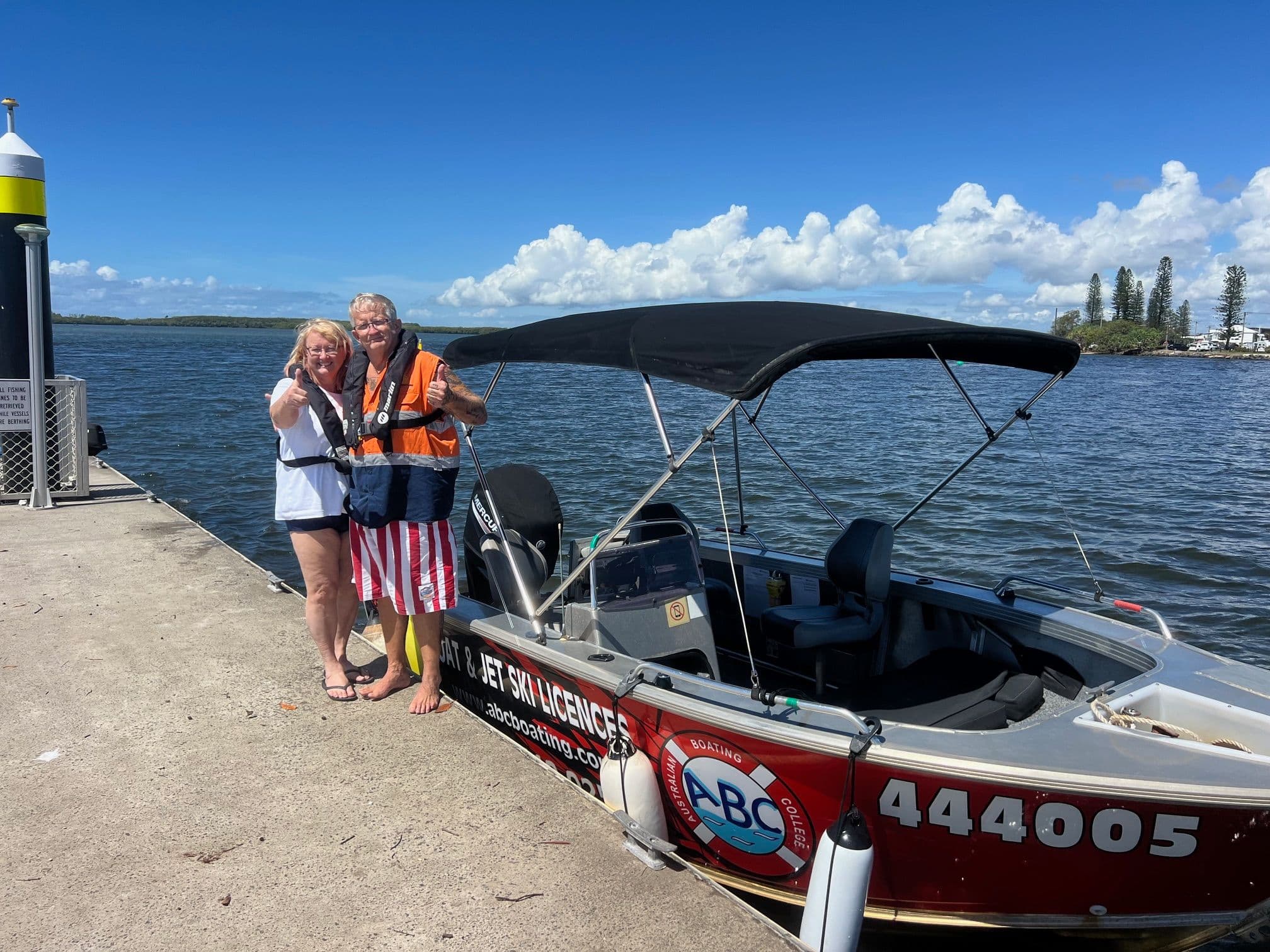
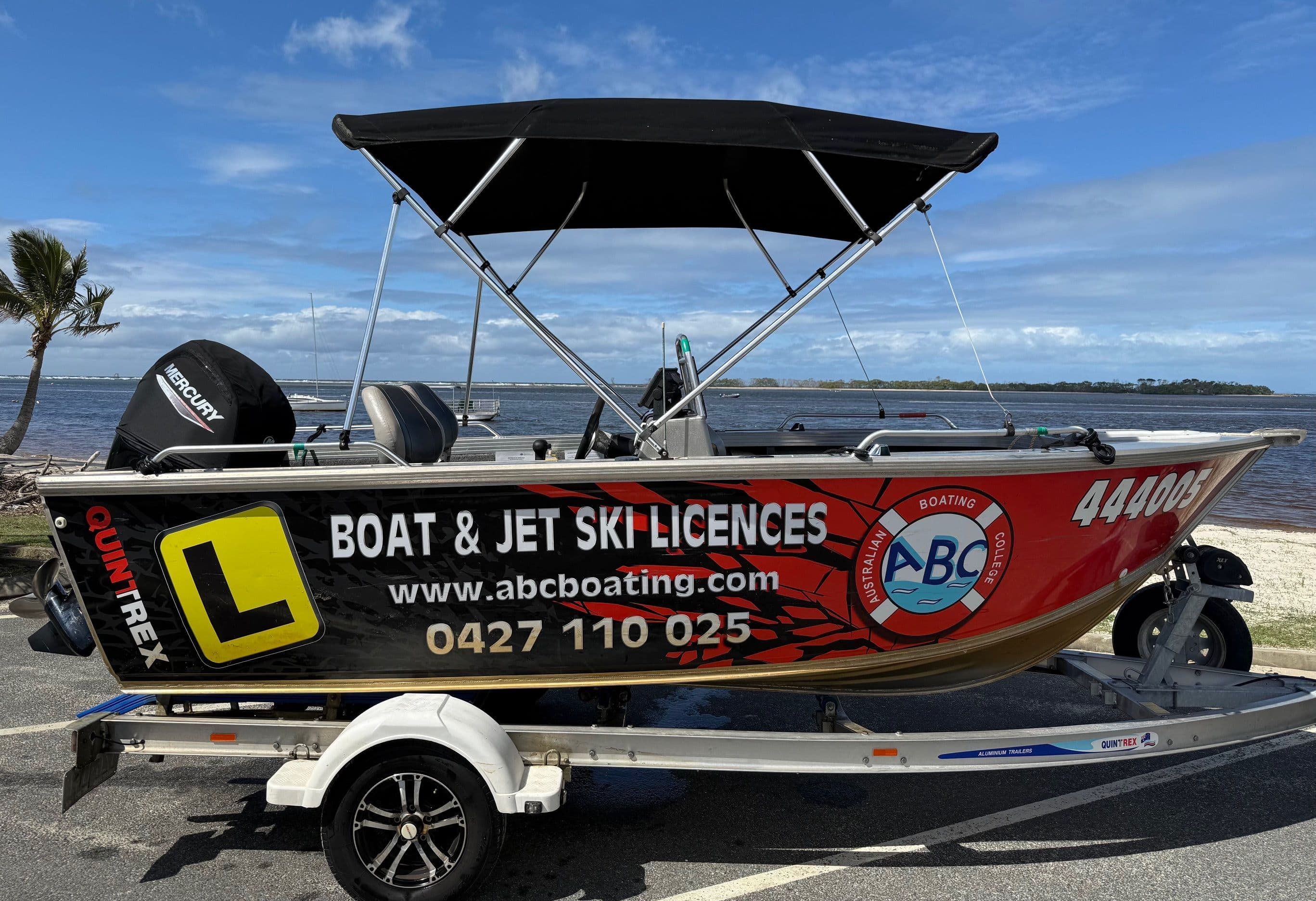
The Noosa River is a fair place to learn for someone headed to the Wide Bay Bar later. It sits behind a designated bar of its own, the Noosa Bar. On the day you stay inside the river. You'll do a man overboard drill, approach a floating object, run a figure 8 on and off the plane, berth and unberth the boat, and hold 6 knots or less. The training tinny has light steering and turns on a dime, which helps with docking and the figure 8.
Then the bar. MSQ's advice is plain. Don't try it in bad weather, heavy swell or strong wind, or on a run-out tide, when waves are usually at their worst. Get to know a bar by crossing it with an experienced boater before you try it yourself. Everyone on an open boat, or in an open area of any boat, must wear a lifejacket crossing a designated bar, whatever the boat's length. ABC Boating's bar-crossing guide opens by calling a bar crossing one of the most dangerous things you can do in a boat. It also suggests a familiarisation day on any bar you mean to cross. The Australian Boating College team on the Sunshine Coast also made a 60-minute video on crossing coastal bars, which ABC lists with that guide.
Plan the trip with some slack. People who have never driven a boat may need more than one practical session, much like car lessons. If weather cuts into the practical, it gets moved to later that day, to another date or to a safe spot. It isn't cut short. After you pass, you get a statement of competency. It's good for six months. You take it to a transport and motoring customer service centre or QGAP office that does marine licensing, with the F2334 form, ID and the fee. Ring first to check they handle marine licences.
The course itself is the same wherever you sit it: the theory online first, in your own time, then a day on the water with a trainer before the assessment. You need a licence for any boat with an engine over 4.5 kilowatts, which is nearly every tinny, runabout and cruiser. Pass, and the Queensland licence never expires. Pick the date that suits you and book online.